“What gods are against us, what gods?”
So! This is where your evil has lured you!
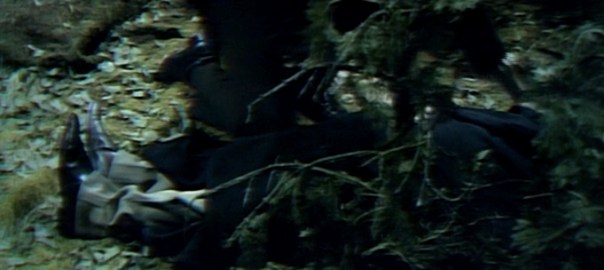
“What gods are against us, what gods?”
So! This is where your evil has lured you!

“Kill Doubloon!”
Happy Turkey Day! It’s time for another pre-emption, as we reach Thanksgiving 1970 and ABC decides to spend the day looking at basketball. It’s traditional on pre-emption days to do a little time travel, and watch a future version of Dark Shadows. This time, we’re only jumping about eight months ahead; we’re going to watch the 1971 feature film Night of Dark Shadows, executive producer Dan Curtis’ next attempt to catch lightning in a bottle.
Last year, Dan signed with Metro-Goldwyn-Mayer to make a Dark Shadows movie, and he came up with House of Dark Shadows, a fearlessly unrestrained retelling of the original Barnabas storyline. The movie did well at the box office, considering how cheap it was to make, and MGM asked for a sequel. Unfortunately, almost every character in House of Dark Shadows met a grisly end in one way or another, so bang goes the Dark Shadows Cinematic Universe before it’s even started.
For the sequel, Dan had the good manners to wait until the TV show was over before hauling half the cast to Tarrytown, New York and dousing them with a hose. The final taping day on Dark Shadows was March 24th, 1971, and shooting began for Night of Dark Shadows on March 29th. Dan had nine hundred thousand dollars, six weeks, and a cast and crew that was mostly from the TV show. He’d planned to resurrect Barnabas for the second movie, but Jonathan Frid was sick of playing vampires, and asked for a million dollars. So Dan took the show’s second male lead, David Selby, and set him up with two leading ladies — Lara Parker, Dark Shadows’ veteran vixen, and Kate Jackson, an ingenue who’d joined the show about ten months earlier and was obviously destined for stardom.
Night of Dark Shadows was vaguely based on the show’s Parallel Time storyline, which was vaguely based on Daphne DuMaurier’s Rebecca, plus some inspiration from The Haunted Palace, a 1963 Roger Corman film that was supposed to be based on an Edgar Allen Poe poem, but was actually based on an H.P. Lovecraft story, “The Case of Charles Dexter Ward”, which when you get right down to it isn’t really very much like Night of Dark Shadows at all.
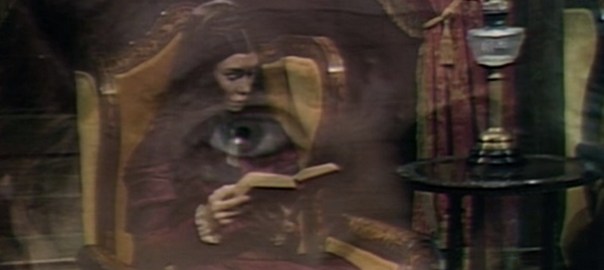
“I can’t bear thinking that when we’re together, we draw her from her grave!”
The table-rappers are at it again. “We must touch hands,” says Quentin Collins to his latest lover, “and we must maintain contact throughout. Understand?” She understands; I think we all do. It’s another romantic, moon-stricken night, where we touch hands by candlelight, look deeply into one another’s eyes, and beseech people.
“We beseech the spirit of Joanna Mills to appear to us,” he calls, “or to communicate through one of us, so that we may resolve all of the problems that have afflicted all of our lives!”
Now, let’s take a moment to appreciate just how many problems he’s expecting to resolve between now and the opening titles. This isn’t a spot-fix for a specific issue; the man wants to resolve all of the problems for all of their lives — and this is a soap opera household, with industrial-grade problems. This could take all night.
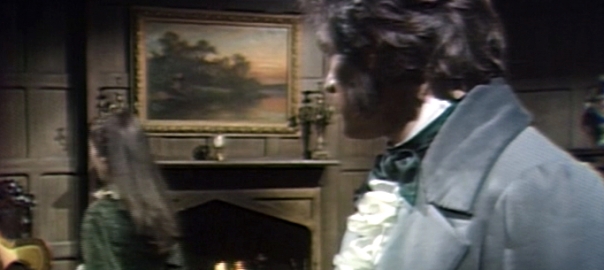
“You know, love can easily disappear when you find the true impossibility of it.”
Do you think it’s easy for me to stand here and accuse you like this, after this afternoon?
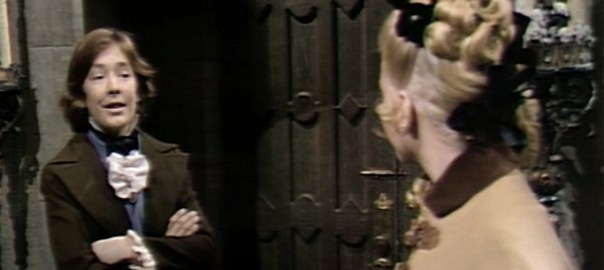
“You’ve seen the strain in this house.”
First of all, I would like to make one thing quite clear: I never explain anything.
“But then something happens,” writes girl governess Daphne Harridge in her personal revenge journal, “just like now, and I feel such hate.”
“Who do you hate, Daphne?” the kid asks, clasping his hands and delivering an even stare. “Tell me.”
The kid is clearly used to this kind of scene. He walked into his governess’ room, came up behind her while she was writing in her diary, read what she was writing, and now he wants answers. He doesn’t betray the slightest bit of anxiety or doubt that this is the natural order of things. He is the heir, she is the help, and therefore he can feel free to peruse any of her personal data that he takes an interest in.
“What else did you see?” snaps Daphne, and the kid goes up a level.
“You never answered my question,” he admonishes. “I was taught to answer questions. Weren’t you, ever?”
She shuts up the book in a locked drawer. “A diary is personal, Tad. I write in it things that I wouldn’t tell anyone.”
He looks off into space. “Do you know, that our minister says that to hate is evil?”
She takes the risk, and hates anyway, and so do I. Sometimes you don’t get much of a choice.
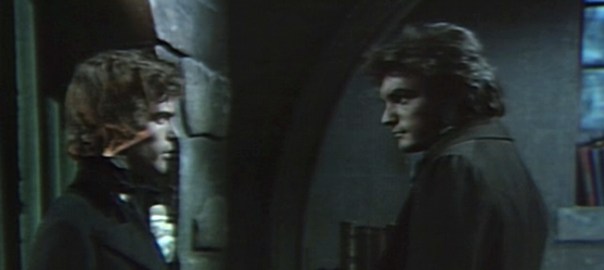
“It was then that I noticed that we all have a strain of despair.”
“I receive a letter every three days,” says Quentin Collins, “and I receive it at one out of two times.”
I’m going to pause on that line for a second, because Quentin is about to say something ridiculous, and it needs a little room to breathe. He’s explaining to his friend Gerard about the letters that he receives every three days, from a dead woman.
“Either in the afternoon,” he continues, “when I’ve just gone to visit the estate manager, or exactly half an hour after that, when I’ve finished my last walk around the grounds.”
Gerard nods. “Someone knows your habits very well,” he says, so he must comprehend that line a lot better than the rest of us. Those two times are basically indistinguishable to the human eye.
Quentin means half an hour after midnight, of course, which you’ll understand once you see the next scene, where Quentin tries to lay a trap for the letter-leaver at twenty minutes after twelve. Or, if you don’t understand it then, then maybe you will on a third or fourth viewing, for example while you’re writing a blog post about it. That is the kind of attention that Dark Shadows demands.
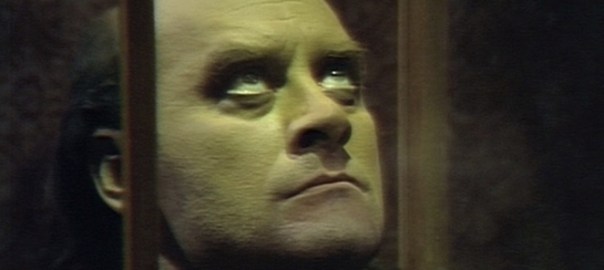
“There is a world — an evil world — which exists for some men.”
He’s not a handsome man, it’s true, but he’s powerful, and portable, and persistent. And he’s the man of your dreams, in the sense that you keep having naptime nightmares where his disembodied head bosses you around.
We’re all familiar with Judah Zachery the paperweight, lurking on the credenza in his glass enclosure, silently slipping through your defenses and inspiring you to steal newspapers and murder an antiques dealer with the wrong ancestor. But what of Judah Zachery, the man?
His eyes could bewitch you, they said. He lured beautiful young women to his house, and persuaded them to participate in unspeakable acts. And this was in the 1690s, when they really were unspeakable, because nobody had invented the slang words to describe them yet.
That was a hundred and fifty years ago, give or take, and for all that time, he’s been operating at a serious disadvantage. They say size doesn’t matter, but try to lure somebody somewhere when you’re ten inches total.
But that ends today. This is the day that Judah Zachery breaks out of his box, and gets his groove on.
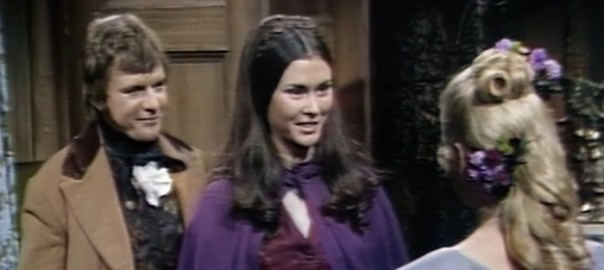
“For mother, the cards are blank. For me, they throb with life!”
Number one: The playroom. Right?
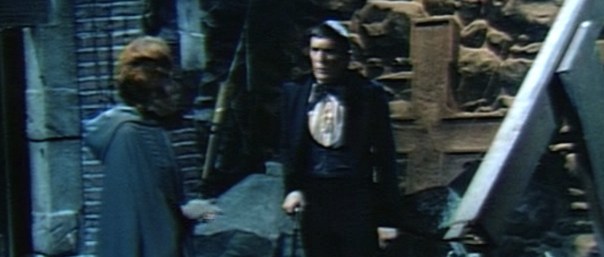
“Judah must be dead, or you would still be in his power.”
“It’s over,” Julia breathes, sinking into an armchair. And it’s not, really, but give it five months or so; we’ll get there.
 Dark Shadows Every Day