“As you have become the chosen one, so has this room become the chosen room.”
For unto us a child is born, unto us a son is given. And all we had to do is open this box, which is super convenient.

“As you have become the chosen one, so has this room become the chosen room.”
For unto us a child is born, unto us a son is given. And all we had to do is open this box, which is super convenient.
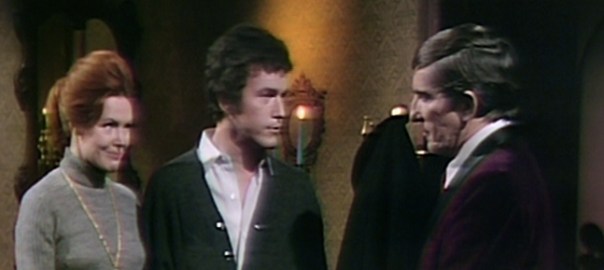
“I feel like if we open it, our lives are going to change.”
The Old Ones were, the Old Ones are, and the Old Ones shall be. Not in the spaces we know, but between them, they walk serene and primal, undimensioned and to us unseen.
So there they are, Pandora and her husband Phil, staring at a puzzle box that will wipe the earth clean, just licking their lips and desperate to get their hands on it. She’s wearing a necklace decorated with the sign of the Naga — a four-headed serpent, a creature without a soul, and the very latest Thing in fashion.
Now they’re at the Old House, these reckless antiquers, and they’re delighted to find a Naga-branded mystery box that would complete their stockpile of hazardous material.
“Is there anything inside?” she asks, and the owner admits, “To tell you the truth, I’ve never looked inside. Is that strange to you?”
“Well,” she grins, “we’re very curious people.” Yeah, you can say that again.
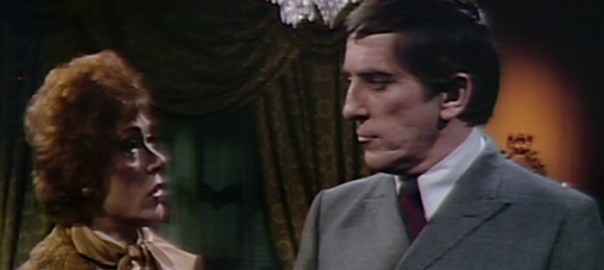
“You mustn’t touch this, Julia. It happens to be very old.”
Barnabas was boring, is the problem. Around this time last year, they wrapped up all of his storylines — Angelique was banished back to Hell, Adam ran away, and all the other villains just burned or fell to powder. At last, Barnabas was triumphant — free from his vampire curse, surrounded by friends and family, universally respected and trusted. It was a nightmare.
With nothing else to do, he became Barnabas the butler, a facilitator for other people’s story progression. The show always faces a crisis when they don’t know what to do with the star attraction, and their usual response is to visit a different time period. When “toxic Barnabas” was getting too hot to handle in November 1967, we went back to his origin story, and when “tame Barnabas” ran out of story potential in March 1969, the show packed him off to 1897.
Barnabas is at his best when he’s on the defensive, struggling and scheming and making terrible mistakes. His trip to 1897 put him on the back foot immediately — no allies, a vampire once again, and generally confused about what he was even supposed to be doing. He had to ingratiate himself with a whole new family, and learn everybody’s secrets without letting on about his own.
And it worked! Even a month-long vacation didn’t diminish his charms; his miraculous return gave the show its all-time best ratings. But now he’s heading back home, where the outlook is even more drab than it was before he left: Quentin’s evil spirit is gone, and Collinwood is more or less at peace. The immediate future looks even more butlery than before.
So the writers, in their infinite lunacy, have decided to dodge the butler problem by making Barnabas the bad guy again. Instead of a happy homecoming, they’re giving him a mysterious new agenda, which splits him away from his friends and family.
It’s a risky idea, with the potential to squander all the good will that they’ve built up with the audience. But what is Dark Shadows except a string of terrible ideas, which sometimes turn out to be amazing?
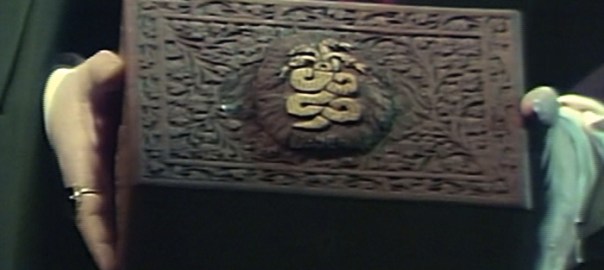
“I can’t understand why I have the feeling that something frightening is going to happen.”
It always starts with a box.
You’ve finally figured out what you’re going to do with your life. You’ve got an unstable girlfriend hidden in your house, who’s provisionally agreed not to massacre herself until you get back. You’ve arranged with a friend to destroy the coffins that he was saving up for you. And now you’re going back home, so that you and your girlfriend can use a magical oil painting to travel one hundred years into the future, turn into different people, and live happily ever after. Everything is going according to plan.
And then somebody hands you a mystery box, and the world slips sideways.
“Have I come back to tragedy and death again?”
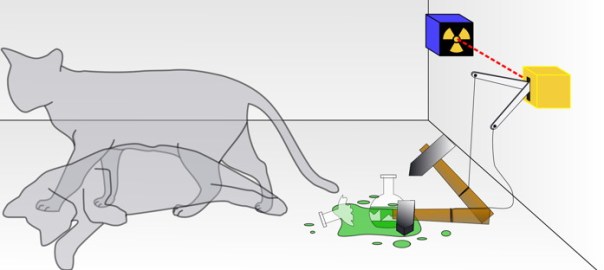
We left off yesterday with Erwin Schrödinger and his magical cat, trapped in a thought experiment about quantum indeterminacy that threatens to destroy us all.
Here’s how it works: The theoretical cat is placed in a sealed chamber with a Geiger counter, a hammer, a flask of cyanide, and a small chunk of something radioactive, which may or may not decay over the course of an hour. Within that hour, there are two possibilities:
#1. The atom decays, which is detected by the Geiger counter, which trips a sensor that makes the hammer smash into the flask, releasing the cyanide and killing the cat.
#2. The atom doesn’t decay, which means no Geiger, no hammer, no cyanide. In that case, the cat is alive at the end of the hour, and it can go about its business.
Now, according to quantum mechanics, the atomic decay in the radioactive substance is in both states simultaneously — both decayed and not — until it’s observed, at which point it resolves into one state or the other. And if the cat’s life is determined by the unresolved atomic decay, then the cat is both alive and dead at the same time — until you open the box and look inside, which causes the wave function to collapse into either “alive cat” or “dead cat”. And then you feed the cat, or bury it, as appropriate.
But Schrödinger completely missed the third alternative, which is that the cat would look at all this equipment, and figure out what’s going on.
At that point, you have an undead cat, sitting alone in a steel box with a flask of cyanide, a hammer and an active source of plutonium, and nothing to do for the next fifty-five minutes but think about the future. Schrödinger has created a dangerous supernatural entity, and provided it with an arsenal.
You don’t resolve a situation like this by opening the box. Opening the box is the beginning of act two.
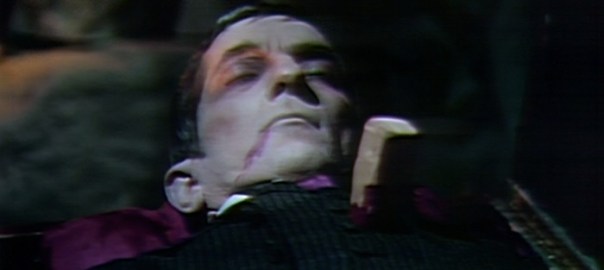
“We’re clearly in the presence of two distinctly different bodies.”
You know, everyone talks about quantum superposition, but nobody does anything about it.
The scientific protocol is as follows: You put a vampire into a box, while the actor goes to Illinois and appears in Dial M for Murder. After four weeks, there’s a fifty-fifty chance that audience interest in the story has decayed.
While the mystery box is closed and the audience can’t observe the vampire directly, the storyline exists in two states simultaneously, a superposition of “dead vampire” and “alive vampire”. This is soap opera quantum mechanics. When you open the box, the two possible quantum states collapse into one, and the audience can observe whether the vampire is alive or dead.
The problem is that Edward Collins and Count Petofi have just opened the coffin, and there’s both a dead Barnabas lying in the coffin and an alive Barnabas collapsing on the cave floor. They’re supposed to choose one or the other; Schrödinger will be simply furious when he hears about this.
So here we are — at the peak of Dark Shadows’ ratings success, cresting the last great surprise before the show begins its long, gradual decline. In this moment, the show’s rising popularity meets its impending defeat; it is simultaneously a blockbuster hit and a soon-to-be-forgotten novelty.
It’s time for reality to collapse into one position or another — and on Dark Shadows, when things collapse, they really collapse.
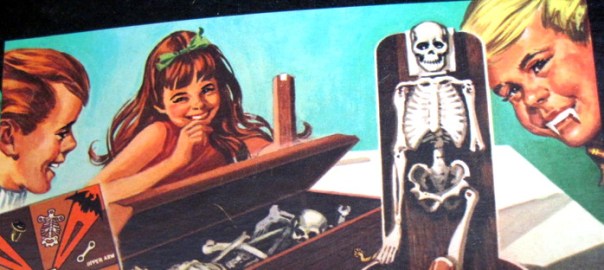
“Satan is determined to take over Collinwood!”
In the summer of 1969, the young set gather every afternoon at four o’clock to watch one of the great pioneers in educational programming.
Not Sesame Street, of course; that doesn’t start until November. For the summer, at least, the kids’ choice is Dark Shadows, and what they’re learning is that murder is awesome, and you can totally get away with it.

“We know nothing about this hand, what it can do or what it cannot do.”
Okay, stop me if you’ve heard this one before: A gypsy and a vampire walk into a cave, carrying a box. The bartender says, do you need a hand? And the gypsy says, no thanks, we’ve already got one.

“Why not bring back a strange, powerful hand to solve all our problems?”
It always starts with a box.
But this time, it’s important. At least, that’s what people tell themselves, just before they pop the lock and open the lid. This time, the wolf is at the door, the bad guy is getting away, the emperor refuses to surrender. I have no choice, they say. It’s really important.
And when they say it’s important, what they mean is I’m important. As in, more important than whoever gets hurt. I am important enough to flip this switch, to drop this bomb, to use this power which no one should wield. I am more important than you, and here’s the proof: this hell I’m unleashing.
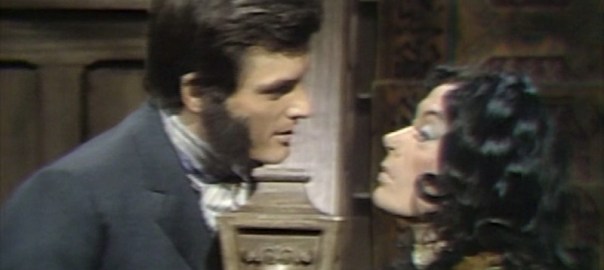
“Don’t touch me! Your grandmother knows how easily I bruise.”
It always starts with a box.
The malicious spirit of Quentin Collins has taken over present-day Collinwood, and he’s in the process of slowly murdering young David. Desperate to save the boy and unable to think of anything else, Barnabas turns to the I Ching, an ancient Chinese secret that has transported his soul back to the late 19th century. There, his astral body meets up with his physical body, which is trapped in a chained-up coffin.
And like any travel experience, it takes forever, there’s hardly any leg room, there’s nothing to eat, and he doesn’t even know where he’s landed. This is why you should never try to check yourself in as luggage.
 Dark Shadows Every Day