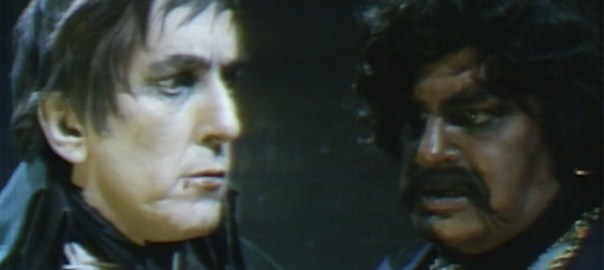
“I’m merely wondering if there’s something in you that reaches out towards unnatural creatures.”
HAMLET
The time is out of joint — O cursed spite,
That ever I was born to set it right!
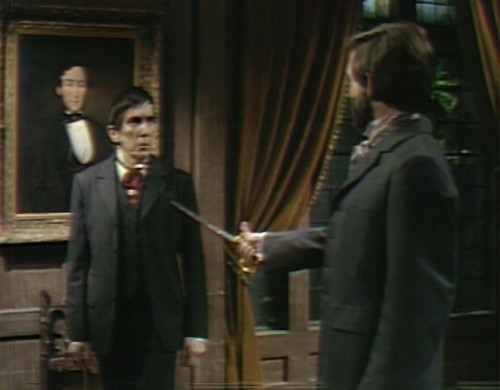
HAMLET
Angels and ministers of grace defend us!
Be thou a spirit of health or goblin damn’d,
Bring with thee airs from heaven or blasts from hell,
Be thy intents wicked or charitable,
Thou comest in such a questionable shape
That I will speak to thee.

BANQUO
If you can look into the seeds of time,
And say which grain will grow and which will not,
Speak then to me, who neither beg nor fear
Your favours nor your hate.

MACBETH
Is this a dagger which I see before me,
The handle toward my hand? Come, let me clutch thee.
I have thee not, and yet I see thee still.
Art thou not, fatal vision, sensible
To feeling as to sight? or art thou but
A dagger of the mind, a false creation,
Proceeding from the heat-oppressed brain?
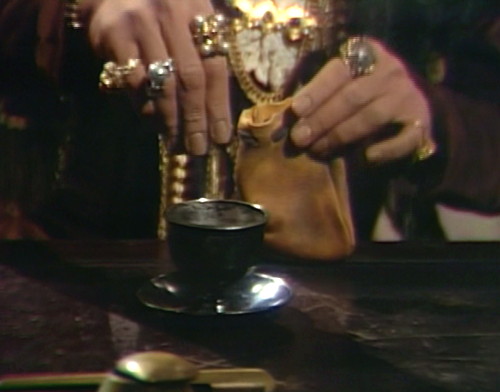
FIRST WITCH
Round about the cauldron go;
In the poison’d entrails throw.
Toad, that under cold stone
Days and nights has thirty-one
Swelter’d venom sleeping got,
Boil thou first i’ the charmed pot.
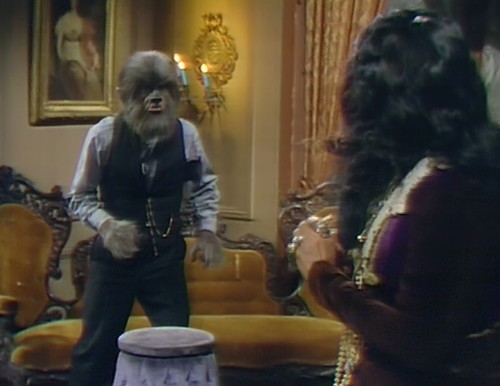
GHOST
Murder most foul, as in the best it is;
But this most foul, strange and unnatural.
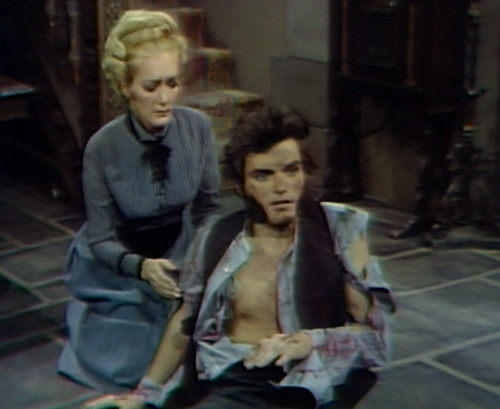
EDMUND
This is the excellent foppery of the world, that,
when we are sick in fortune, — often the surfeit
of our behavior, — we make guilty of our
disasters the sun, the moon, and the stars: as
if we were villains by necessity; fools by
heavenly compulsion; knaves, thieves, and
treachers, by spherical predominance; drunkards,
liars, and adulterers, by an enforced obdience of
planetary influence; and all that we are evil in,
by a divine thrusting on: an admirable evasion
of whoremaster man, to lay his goatish
disposition to the charge of a star!
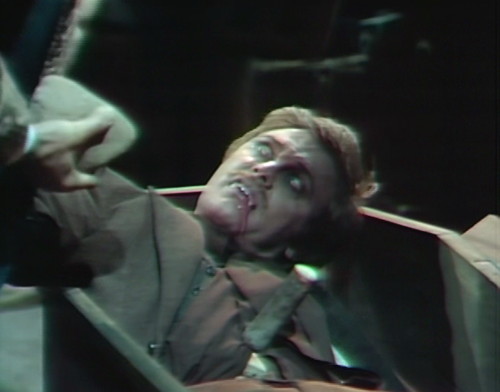
MACBETH
It will have blood; they say, blood will have blood:
Stones have been known to move and trees to speak;
Augurs and understood relations have
By magot-pies and choughs and rooks brought forth
The secret’st man of blood.
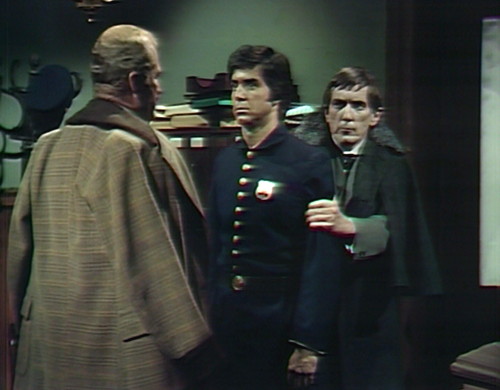
HAMLET
What may this mean,
That thou, dead corse, again in complete steel
Revisit’st thus the glimpses of the moon,
Making night hideous; and we fools of nature
So horridly to shake our disposition
With thoughts beyond the reaches of our souls?
Say, why is this? wherefore? what should we do?
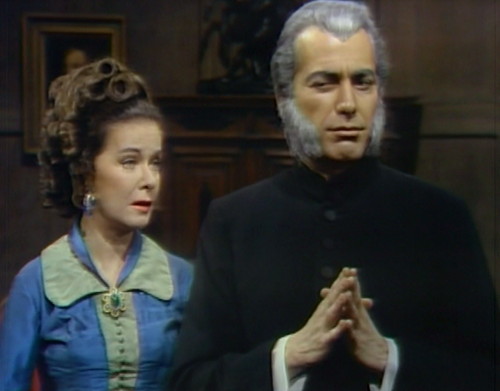
GHOST
With witchcraft of his wit, with traitorous gifts,–
O wicked wit and gifts, that have the power
So to seduce!–won to his shameful lust
The will of my most seeming-virtuous queen:
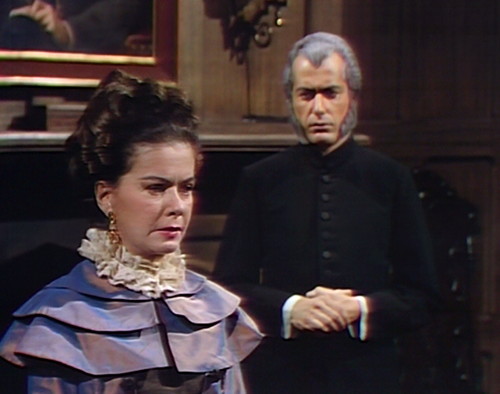
HAMLET
Thrift, thrift, Horatio! the funeral baked meats
Did coldly furnish forth the marriage tables
Would I had met my dearest foe in heaven
Or ever I had seen that day, Horatio!
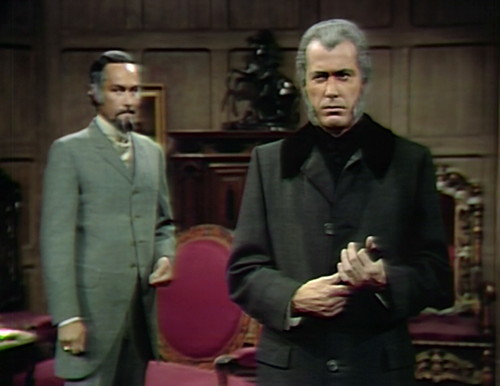
LADY MACBETH
Art thou afeard
To be the same in thine own act and valour
As thou art in desire? Wouldst thou have that
Which thou esteem’st the ornament of life,
And live a coward in thine own esteem,
Letting ‘I dare not’ wait upon ‘I would,’
Like the poor cat i’ the adage?
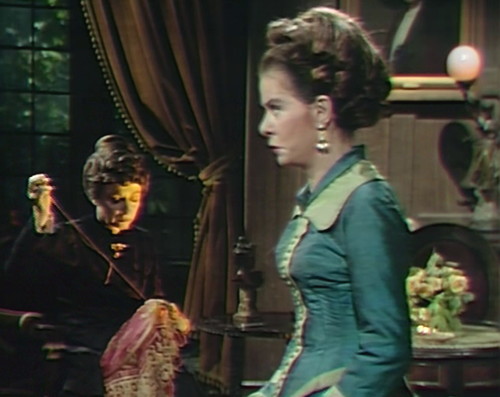
MACBETH
Avaunt! and quit my sight! let the earth hide thee!
Thy bones are marrowless, thy blood is cold;
Thou hast no speculation in those eyes
Which thou dost glare with!
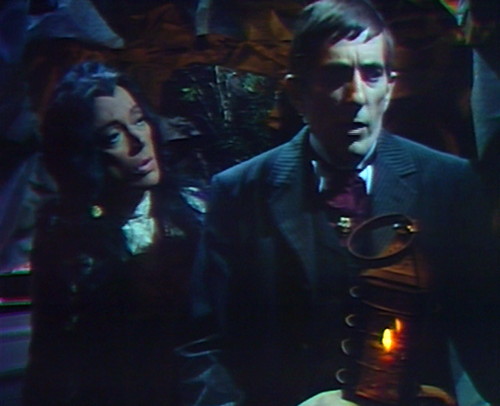
MACBETH
To-morrow, and to-morrow, and to-morrow,
Creeps in this petty pace from day to day
To the last syllable of recorded time,
And all our yesterdays have lighted fools
The way to dusty death.
MACBETH
Out, out, brief candle!
Life’s but a walking shadow, a poor player
That struts and frets his hour upon the stage
And then is heard no more: it is a tale
Told by an idiot, full of sound and fury,
Signifying nothing.
Monday: Sign the Paper.
Dark Shadows bloopers to watch out for:
When Trask tells Magda, “It’s none of your business,” someone in the studio coughs. They cough again at the end of the scene.
In the last scene, Quentin sits by the gramophone and recites the lyrics to his hit single, “Shadows of the Night (Quentin’s Theme)”. The mic comes in too late to pick up the first line of the song.
Behind the Scenes:
The policeman is played by Robert Warlock, in his only appearance on the show. He also appeared in the 1967 film The Producers, where he was the audience member who first starts applauding after “Springtime For Hitler”.
Monday: Sign the Paper.

— Danny Horn
 Dark Shadows Every Day
As an even bigger fan of Shakespeare than I am of Dark Shadows, I truly appreciate your entry today, Danny. (Not that I don’t always appreciate them!)
That’s one of the best small moments of THE PRODUCERS.
The best moment of the whole movie as far as I’m concerned. Everyone else is so horrified and he is so blissed out that I start laughing even before they jump him.
I’ve used Dark Shadows characters as hooks to hang my interpretations of Shakespeare characters on in both Macbeth and Julius Caesar. it’s worked out really well.
Off, off commercial!
Sheriff’s a talking shadow, a day player
That speaks and plays half hours upon the screen
And then is seen no more: it is a tale
Told by a producer, full of sound and effects,
Signifying ratings.
Very funny.
I was thinking about:
Signifying nothing…
Unless, of course, there’s a cult following
In which case:
Thou immortal reruns!
And all our yesterdays have lighted fans
The way to DVD.
Til the last syllable of recorded time.
Out, out! Stage candle!!
It is a tale, told by Dan Curtis, and is told forevermore.
The cough heard is actually Grayson Hall–you can see her do it the first time, and she coughs again on her exit from the scene.
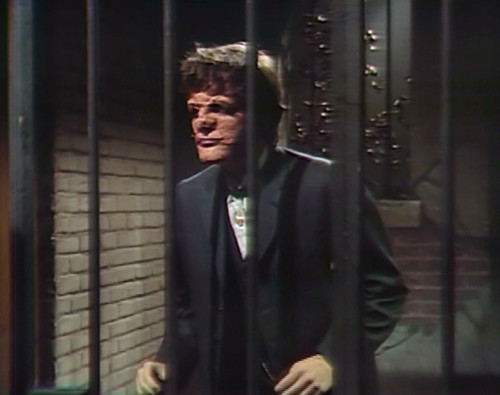
In episode 787, Barnabas puts a whammy on the policeman to make him obey; in today’s show, he neck bites the officer on duty. Why? It makes it obvious that Quentin had help in getting out of the cell, and that the help came from the local vampire. (I suppose that now he has a blood slave in the police force; handy for next time he gets a parking ticket.)
Even for Barnabas, this is poorly planned.
I think the reason Barnabas bit the police officer this time is to make clear that it was Barnabas who freed Quentin. Jonathan Frid wasn’t in this episode, but “Barnabas” was–this is why the release of Quentin is through an invisible force or Barnabas himself being invisible. The bitten police officer is visual representation that Barnabas had been there. (Yes, I know Magda told Quentin earlier in the episode that Barnabas would be coming that night to let him out.) Another conundrum, though–Magda tells Quentin that Barnabas will be taking him to the Old House, so why does Quentin end up wandering into Collinwood?
Every time Reverend Trask looks at the apparition of Minerva he’s giving away to Judith that he can obviously see it, but she doesn’t seem to notice.
Ha, yes! “Judith, if you mean the woman in black doing needlepoint in the rocker, no, I don’t see her.”
Is it me or does the sound effect for the slap that Trask gives Judith at 4:34 just a split second late?
It was not only late, but it looked to me as if his hand doesn’t even make contact with her.
Loved all the Shakespeare quotes. About Barnabus helping Quentin to escape, are we to assume he somehow also restored Quentin’s memory of who he is?
I think we’re supposed to assume that it was hearing “Shadows of the Night” that restored Quentin’s memory.