Tag Archives: decline and fall

Episode 844: Those Meddling Adults

“I must go. I have a feeling that there are evil forces at large tonight.”

As you know, it’s September 1969, and our vampire soap opera is reaching the peak of its popularity. After school, the kids all hurry home to check in with Collinwood, and find out what the vampires and witches and mad scientists are up to. Dark Shadows owns Mondays through Fridays — but on Saturday mornings, where we least expected it, a new creature is born. It has five heads and twelve legs, and it will run forever.

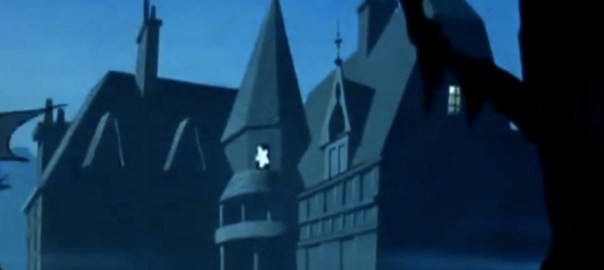
Scooby-Doo, Where Are You! is an occult-tinged mystery-adventure cartoon sitcom about four hep teens and a talking Great Dane, who travel around the country in a van called the Mystery Machine. Each week, they visit one desolate tourist attraction after another — an abandoned circus, a deserted mansion, an old marina or a haunted hunting lodge — where they inevitably find a ghost, a witch, a Frankenstein, a phantom (which is a kind of ghost), a mummy, a zombie, a killer robot, or a snow ghost (which is also a kind of ghost).

The monsters are thrilling, but they aren’t real; the creature is always caught at the end of the episode and unmasked, revealing that they’re actually someone that the teens already know. This is a comforting, rational world, where there’s no such thing as a monster — there’s just your Uncle Stuart, or that nice archaeologist, or the curator of a local museum, and they’re dressing up as monsters because they’re committing a crime, and they want to murder you.

On Dark Shadows, of course, there are actual monsters, and the real mystery machine is the television, which is broadcasting directly at a defenseless audience of housewives and children with twenty-two minutes a day of black magic and werewolf attacks. For the last two and a half years, we’ve been asking the question, “How did they get away with this?” The answer, as far as I can figure, is that nobody actually cared. Everyone thought that Dark Shadows was perfectly acceptable children’s television; that’s why they made trading cards and View-Master reels and joke books.

But as summer wanes, that begins to change. The fall of 1969 is where we start asking the flip side of that question, namely: How did they stop getting away with it?
Continue reading Episode 844: Those Meddling Adults

Episode 818: The Green Light

“When I saw myself rising from the dead — with those fangs!”

There are eight turning points in the story of Dark Shadows — moments when the focus and direction of the show changed forever. Four of them are character introductions, and four are backstage events. Here they are, in order of appearance:

  • the introduction of Barnabas,
  • Julia’s offer to cure Barnabas,
  • writer Sam Hall joins the show,
  • the introduction of Angelique,
  • Jonathan Frid’s ten-city publicity tour,
  • writer Ron Sproat leaves the show,
  • the introduction of Quentin,
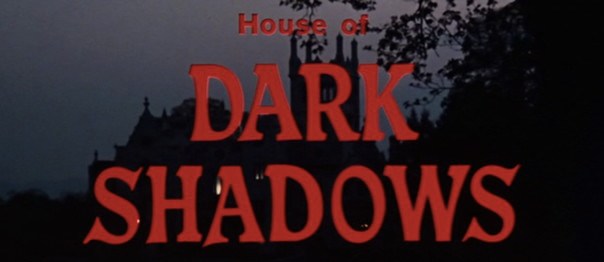
  • and MGM greenlights House of Dark Shadows.

Here we are in mid-August 1969, and we’ve reached that final turning point — the moment when a grown-up movie studio agreed to distribute a feature film about a daytime soap opera, using the same cast and crew, while the TV show is still in production. Everything that happens over the next year and a half of the show will be affected by that deeply peculiar decision.

The story that people tell about House of Dark Shadows is that creator Dan Curtis, like all artistic visionaries, was deeply misunderstood. He had a burning ambition to turn his vampire soap opera into a feature film, and nobody at the movie studios would believe in his dream. Finally, Dan found a kindred spirit in James Aubrey, the president of Metro-Goldwyn-Mayer, who recognized the value of a Dark Shadows movie and eagerly gave it the green light.

Once the film was greenlighted, the story goes, the only headache to figure out was how to get the cast off the show for six weeks while they filmed the movie. Dan and the writers came up with a way to focus on the actors who weren’t part of the movie cast, until the shooting was over. That way, the movie wouldn’t have a negative impact on the show, and when shooting wrapped, everything went back to normal. On release, the movie was such a success that it saved MGM from closing down.

That story is almost entirely false. This is actually the story of the destruction of Dark Shadows. It’s also the story of the destruction of MGM. And like all Dark Shadows stories, the line between hero and villain is not necessarily clear.

Continue reading Episode 818: The Green Light